
What We Do
Home / What We Do
In the heart of Central Africa lies one of the planet’s most vital ecosystems — the Congo Rainforest. It is a place of breathtaking beauty and deep mystery, home to the last strongholds of Grauer’s gorillas, forest elephants, and chimpanzees, as well as thousands of plant species found nowhere else on Earth. But it is also home to millions of people — Indigenous and local communities whose lives are intertwined with the forest’s survival.
The Congo Rainforest Fund exists to protect this delicate balance between people and nature. Our work is rooted in the belief that conservation cannot succeed without supporting the communities who depend on the forest. Through our projects in the Itombwe Nature Reserve, Kahuzi-Biega National Park, and neighboring regions, we are building a new model of conservation — one led by local guardians, guided by science, and sustained by education, livelihood, and hope.
Protection
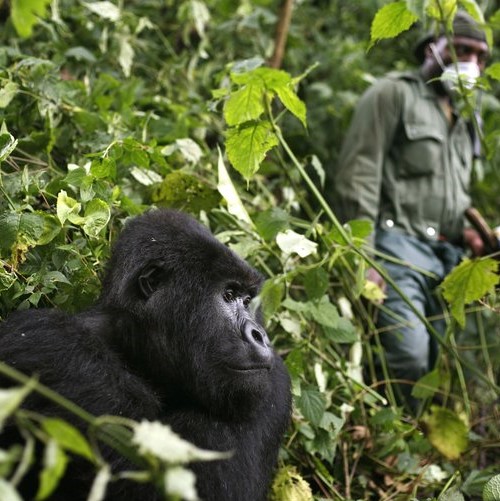
Our first mission is to protect the forest and its wildlife from immediate threats. Across community reserves like Itombwe, illegal mining, logging, and hunting are destroying habitats that have stood for thousands of years. Working in collaboration with the Institut Congolais pour la Conservation de la Nature (ICCN), we are training and equipping community eco-guards, removing snares, dismantling poaching camps, and restoring 35,000 hectares of critical habitat.
This work isn’t just about enforcing boundaries — it’s about building relationships. Our eco-guards come from the very villages they protect. Through community-led patrols, participatory governance, and local conservation committees, people who once had no voice in the forest’s management are now its greatest defenders.
Each snare removed, each gorilla nest recorded, each poacher turned advocate — these are small victories that add up to lasting change.
Education
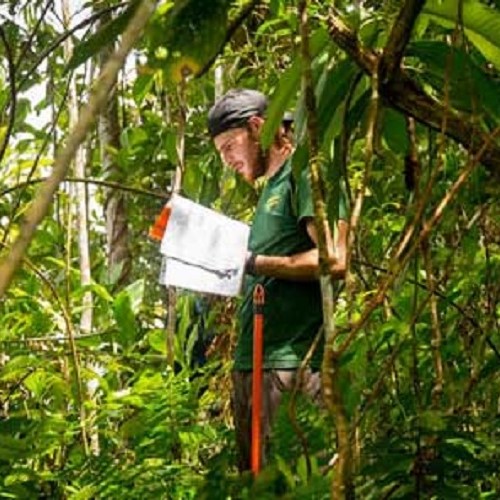
Conservation begins with understanding. That’s why CRF invests in education at every level — from schoolchildren in Kahuzi-Biega to village leaders in Itombwe.
We are building educational facilities inside Kahuzi-Biega National Park, including a museum and visitor center that will serve as a living classroom for the public. Here, students and visitors will experience the story of the Congo Basin — not as something distant or abstract, but as part of their shared future.
In communities surrounding the parks, our programs integrate environmental education into daily life. Through conservation clubs, women’s groups, and storytelling events, we teach how forest health and human well-being are inseparable. When children learn the songs of the forest and see a gorilla not as an animal to fear but as a neighbor to protect, conservation becomes cultural — not just scientific.
Research
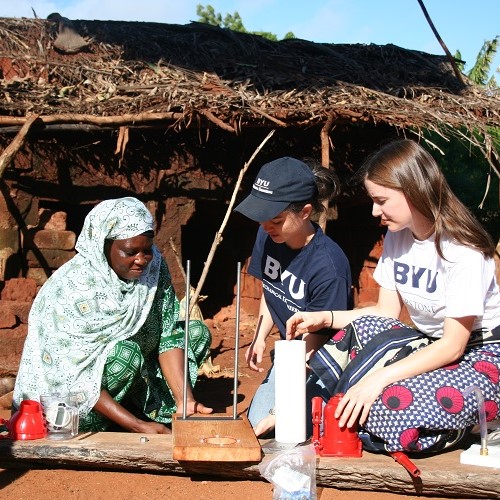
Effective conservation requires knowledge. CRF supports and conducts scientific research that helps us understand the rainforest’s biodiversity and the challenges it faces.
Our teams work with ICCN scientists, researchers at The University of Bukavu, and local researchers to track wildlife populations, map habitats, and study the behavior and movement of species like Grauer’s gorilla, L’Hoest’s monkey, and African grey parrots.
We implement long-term monitoring programs to measure the impact of our conservation and eco-tourism initiatives, ensuring that progress is real, measurable, and sustained. The data we collect doesn’t sit on a shelf — it informs policy, improves management strategies, and supports international collaboration for species protection.
Research is how we listen to the forest. Every footprint, every sound, every nest tells us something — if we are quiet enough to hear it.
Raising Awareness
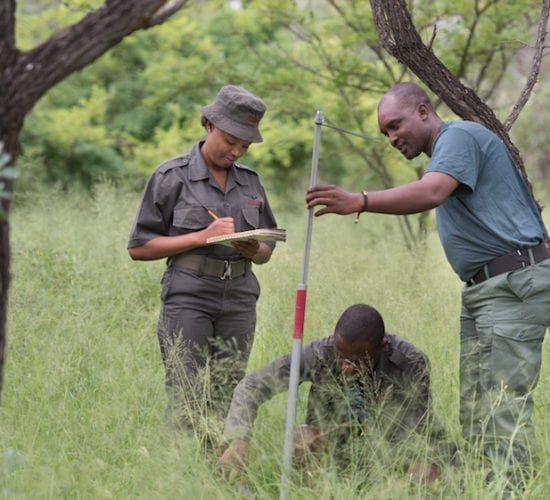
Conservation cannot happen in silence. The world must know what is at stake — and what is possible.
CRF is committed to raising awareness both locally and globally. We run community outreach campaigns that promote respect for wildlife and responsible forest use, while connecting local voices to international audiences.
In April 2025, architect and CRF co-founder Rob Kain delivered a powerful TED Talk that brought the story of the Congo Rainforest to a worldwide audience. In it, he shared how architecture, ecology, and human empathy must come together to protect the last great rainforests on Earth. His message — that the survival of endangered species and the survival of human culture are inseparable — continues to inspire new allies, donors, and advocates across continents.
We’re also introducing creative public engagement initiatives like the “Gorilla Birthday Party” and “Baby Naming Ceremony” — joyful celebrations that honor the lives of gorillas born in protected areas and invite people everywhere to take part in their story. These events mark a cultural turning point, transforming conservation from an obligation into a shared celebration of life.
Through storytelling, film, and digital outreach, we aim to show the world that what happens in the Congo doesn’t stay in the Congo — it affects the climate, biodiversity, and future of every living being on Earth.
The Bigger Picture
The Congo Rainforest is the first lung of our planet. Its rivers feed the Nile. Its trees store more carbon than the Amazon. Its people hold generations of knowledge about balance and resilience.
By protecting this forest, we protect the future — not just for the gorillas and elephants, but for ourselves.
The work is urgent. The challenges are immense. But with every patrol, every classroom, and every new partnership, we are writing a different story for the Congo — one where people and nature thrive together.
Restore the Congo Rainforest And Its Inhabitants


Address
Address in GOMA, DRC
No33 Avenue BUTEMBO, Q Le Volcan, GOMA VILLE.
+243991513285
Address in USA
134 Oriole Circle, Novato, CA, 94949
+1(415) 500-1990
Keep up to date on what we are doing in the Congo and
how we are working to save the Rainforest!
Quick Links
Newsletter
Get Our Top News Letter Into Your Inbox
© Congo Rainforest Fund, All Right Reserved.
The Congo Rainforest Fund is a 501(c)(3) nonprofit organization. Your donation is tax-deductible to the fullest extent allowed by law.